What actually helps people keep to a medication schedule
Simpler schedules, pill organisers, daily routines, reminders and pharmacist support can all help, though the evidence also shows their limits.
Start with honest expectations
There is no shortage of ideas for helping people take medicines consistently. The evidence on how well they work is more sobering.
A Cochrane review, updated in 2014, gathered 182 randomised trials of adherence interventions1. Of the 17 trials with the lowest risk of bias, only five improved both adherence and health outcomes1. Even the most effective interventions did not lead to large improvements1. The authors described current methods for chronic conditions as "mostly complex and not very effective"1.
That does not mean nothing helps. It means effects are often modest and vary from study to study. The World Health Organization found that the most effective approaches tackle more than one barrier at once2.
Simpler schedules and packaging
Fewer doses a day tends to help. A systematic review found 20 studies that measured adherence with electronic monitoring3. All 20 reported higher adherence with less frequent dosing, and the difference was statistically significant in 153. In five of six studies comparing once-daily with three-times-daily dosing, once daily gave 22% to 41% more adherent days3. Compared with twice-daily dosing, most studies found 13% to 26% more adherent days3.
A review of systematic reviews also listed fewer prescribed medicines and fixed-dose combination pills among factors linked to better adherence4. Whether your own schedule can be simplified is a question for your doctor or pharmacist.
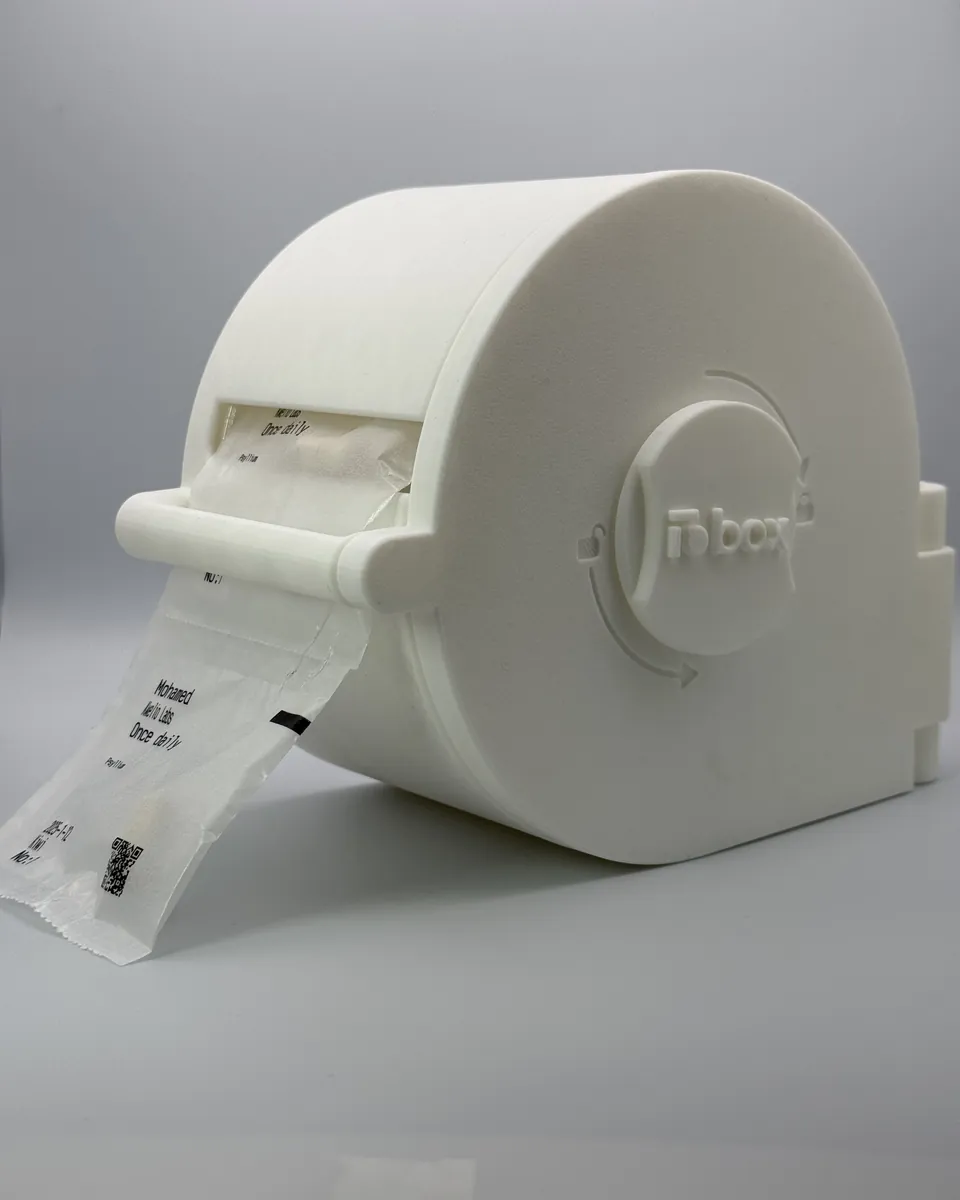
Packaging is the other simple lever. A Cochrane review of 12 studies, with 2,196 participants, looked at packaging that marks the day or time of each dose5. Reminder packaging increased the proportion of people taking their medicines, but the effect was not large5. There was some evidence of benefit for clinical outcomes such as blood pressure5.
A second review of 30 studies found a significant effect on at least one adherence measure in 17 of them6. However, its authors judged the overall quality of the studies to be poor, and the evidence low6. The US Centers for Disease Control and Prevention describes pillboxes and blister packs as a proven, cost-effective way to reduce unintentional missed doses7.
Linking doses to daily routines
Habit research offers a useful lens. Psychologists define habits as actions triggered automatically by cues that have become linked to them8.
In one study, 96 volunteers repeated a chosen daily behaviour in the same context, such as after breakfast, for 12 weeks9. The time it took to reach 95% of peak automaticity ranged from 18 to 254 days9. A summary of the work put the average plateau at around 66 days8. Missing one opportunity did not materially affect the process9.
The same idea appears in medication research. A meta-analysis of 112 comparisons, involving 34,272 adults with high blood pressure, looked at which intervention components worked best10. Among the most promising were linking medicine-taking with existing habits, pill boxes and special packaging, feedback on adherence, and self-monitoring of blood pressure10. The most effective interventions combined several components and were delivered over many days10.
In practice, this can mean tying a dose to something you already do every day, at the same time and place. Ask your pharmacist whether your medicine needs to be taken with food or at a set time.
Reminders
People often miss doses because of forgetfulness, changing schedules or busy lives5. Reminders are aimed squarely at this.
Short-term results look encouraging. A 2016 meta-analysis of 16 randomised trials found that text messages roughly doubled the odds of taking medicines as prescribed11. Assuming a starting rate of 50%, the investigators estimated that adherence could rise to about 68%11. They urged caution, because the trials were short and relied on self-reported adherence11.
Longer-term results are more mixed. A 2021 Cochrane review looked at 14 trials of mobile phone interventions for medicines that help prevent heart attacks and strokes12. Each trial followed people for at least 12 months. Some interventions may help people take their medication, but the benefits are small or modest, and some trials found no benefit12. Text messages alone may have little or no effect on blood pressure control12.
Support from your pharmacist and care team
People matter as much as tools. In the 2014 Cochrane review, the most reliable trials usually involved tailored, ongoing support from health professionals such as pharmacists1. That support often included education, counselling and daily treatment support1.
One US study described by the CDC tested team-based care after a hospital stay7. It combined pharmacist-led medicine review and education, collaboration between pharmacists and doctors, and reminder calls7. After 12 months, 89% of patients in the programme were adherent, compared with 74% of those not receiving it7.
Cost is part of the picture too. When one US employer removed or reduced co-payments for statins and an antiplatelet medicine, adherence rose by 3% to 4%7.
No single tool works for everyone. In the research, the most effective approaches combined several components rather than relying on one2, 10. A routine you already have, a reminder and someone to talk to are a reasonable place to start. If something keeps getting in the way, talk to your doctor or pharmacist about it.
The Kwelio app is built around this idea: a reminder on your schedule and a clear record. It comes to the App Store in Q4 2026.
This article is general information, not medical advice. Talk to your doctor or pharmacist about your own medicines.
Sources
- Interventions for enhancing medication adherence (Nieuwlaat et al.), plain language summary: Ways to help people follow prescribed medicinesCochrane, 2014
- Adherence to long-term therapies: evidence for actionWorld Health Organization, 2003
- Effect of medication dosing frequency on adherence in chronic diseases (Saini et al.)The American Journal of Managed Care, 2009
- Determinants of patient adherence: a review of systematic reviews (Kardas, Lewek and Matyjaszczyk)Frontiers in Pharmacology, 2013
- Reminder packaging for improving adherence to self-administered long-term medications (Mahtani et al.), plain language summaryCochrane, 2011
- Effect of drug reminder packaging on medication adherence: a systematic review revealing research gaps (Boeni et al.)Systematic Reviews (BMC), 2014
- CDC Grand Rounds: Improving medication adherence for chronic disease management, innovations and opportunities (Neiman et al.)US Centers for Disease Control and Prevention, MMWR, 2017
- Making health habitual: the psychology of 'habit-formation' and general practice (Gardner, Lally and Wardle)British Journal of General Practice, 2012
- How are habits formed: modelling habit formation in the real world (Lally et al.), abstractEuropean Journal of Social Psychology (via ISPA repository), 2010
- Interventions to improve medication adherence in hypertensive patients: systematic review and meta-analysis (Conn et al.)Current Hypertension Reports (Springer), 2015
- Mobile telephone text messaging for medication adherence (journal scan of a 2016 meta-analysis in JAMA Internal Medicine)American College of Cardiology, 2016
- Mobile phone-based interventions for improving adherence to medication prescribed for the primary prevention of cardiovascular disease in adults (Palmer et al.), plain language summaryCochrane, 2021