
One photo at each dose. Assisted verification: Kwelio suggests what it can see, and she confirms against her schedule.
Winner · Create Apps ChampionshipDubai’s App of the Year 2026and Longevity App of the Year
Health, made visibleDubai, UAE
The most expensive pill is the one we never took.
Kwelio makes health routines visible, starting with the medicines people take at home, so insurers, doctors and care teams can help before it is too late.
01Meet Sara

SaraAn illustrative member, not a real patient
Sara takes her medicines at home, out of sight.
Sara has diabetes and takes medication every day. Like many people with a long-term condition, she sometimes misses a dose, or takes it late. No one sees it.
- 50%of people with chronic conditions don’t take their medicines as prescribed WHO, 2003
- 20.7%of UAE adults live with diabetes on an age-adjusted basis, among the highest prevalence rates in the world IDF, 2024
02What no one sees
Her insurer sees what was dispensed, not whether it was taken.
By the time a missed dose shows up anywhere, it is usually a hospital visit.
- 3.4Mpeople in the UAE may not be taking their medicines as prescribed Kwelio estimate
- $5–7Ba year: the estimated cost of non-adherence in the UAE Kwelio estimate
03What we believe
“The best technology is technology that you don’t have to think about.”
So Kwelio fits into the moment Sara already has, and keeps everything else out of sight: for her, for her care team, and for her doctor.
Kwelio in one minute.
One score from 0 to 100. How consistently someone keeps to their medicines, over 30 days.
Who to reach first. Kwelix gives a care team a short list. The care team decides.
Calm technology. No streak that resets, no leaderboards, nothing to lose.

Pick where Kwelio lives. Atmospheric design: six terrains, four times of day. Try one, and move the sun.
The care team sees the score. Not the photos, not the daily logs.
04 · POP by Kwelio
A few seconds at each dose.
One reminder on her schedule. One photo of her medicines: Kwelio suggests what it can see, and she confirms what she took against her schedule. A record she owns. We call it the Pop ritual.
Assisted verification: photo capture with confirmation against her schedule. Our computer-vision model is in training. A photo and a dose log are a record, not proof that a medicine was taken.
POP by KwelioQ4 2026 · iPhone
A screen recording of the evening Pop: Sara photographs her medicines, Kwelio suggests the ones it can see, she confirms what she took and six doses are logged with a photo
Sample data05 · Sara and her care team
Her phone. Their screen.
What Sara does in a few seconds becomes something her care team can act on, without her day being watched.
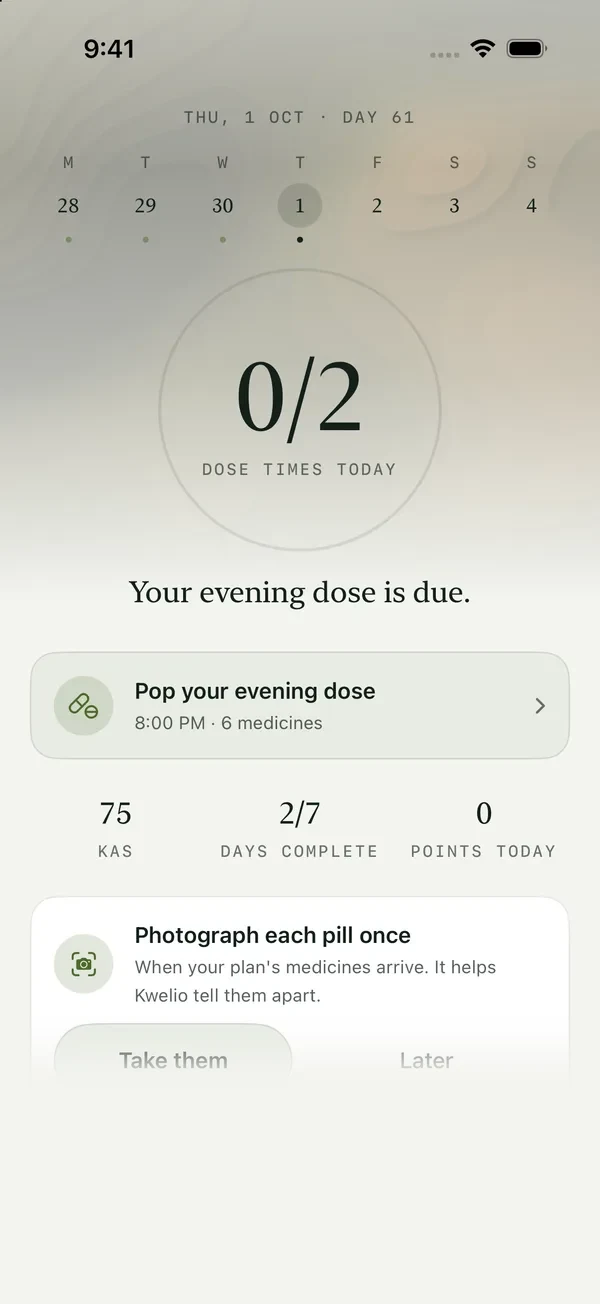

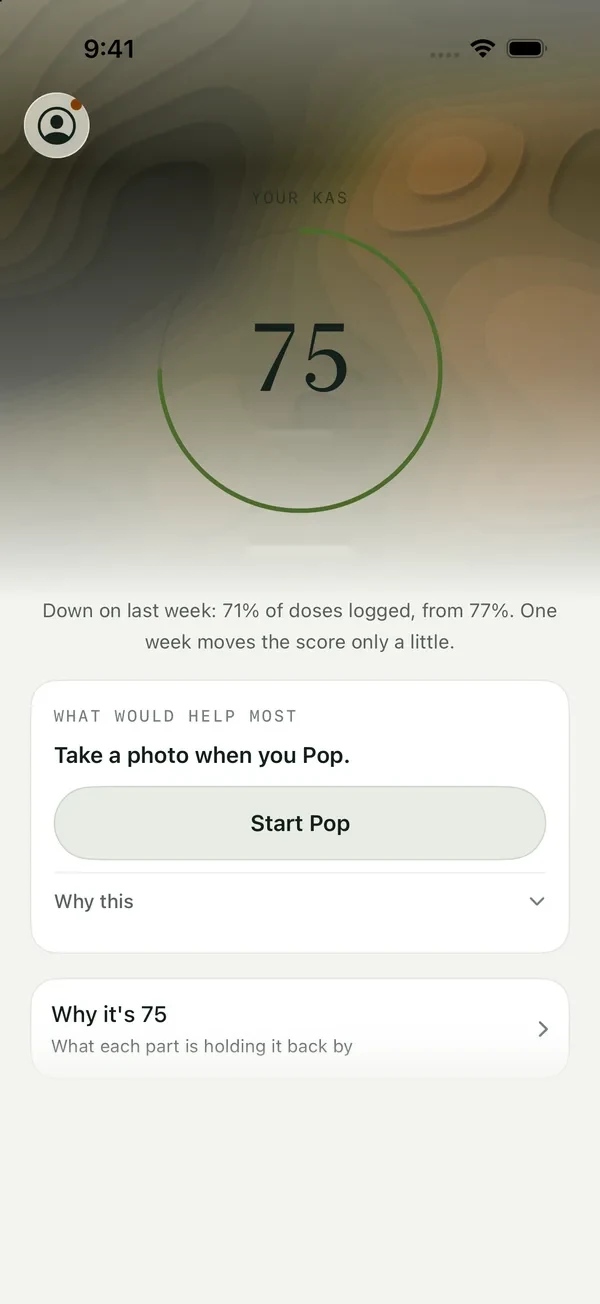
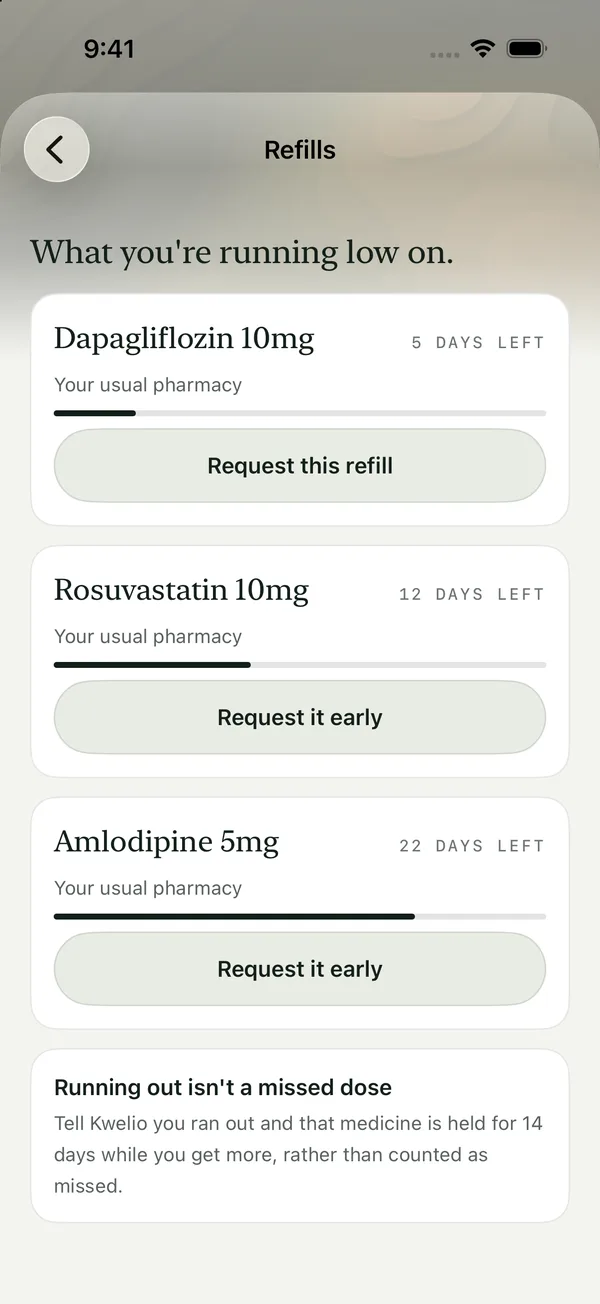
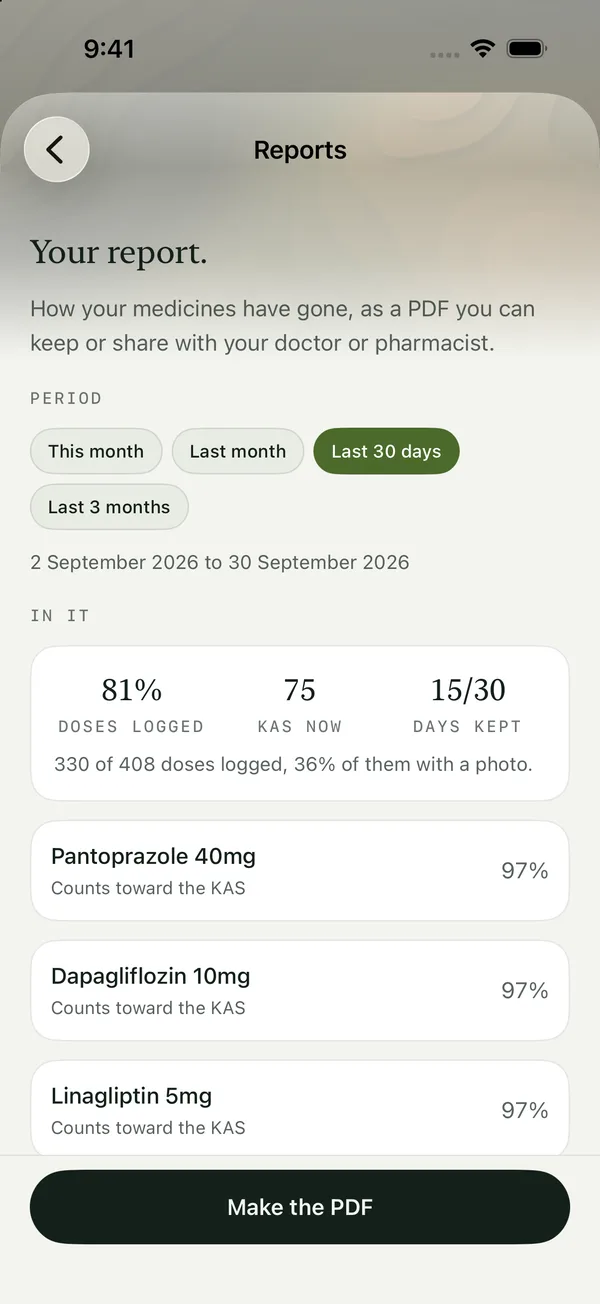
One calm moment at each dose.
Sara sees what to take and when. At each dose time she takes one photo, Kwelio suggests what it can see, and she confirms. Her day stays hers.
Kwelix shows demonstration dataOne number for how consistently she keeps to her medicines.
KAS runs from 0 to 100 over a rolling 30 days. Sara’s has slipped from the low 80s to 75: early enough to help.
Sample data: Sara is an illustrative memberA short list of who to reach first.
KIS weighs how likely a lapse is, from slipping dose times to a refill running late, against how much it would matter. Sara rises to the top of the queue, and a person on her care team decides what to do.
Kwelix shows demonstration dataA record her doctor can read in a minute.
Sara can keep or share a report of how her medicines have gone: doses logged, her KAS and the days she kept. Her doctor or pharmacist decides; Kwelio shows what happened.
Sample dataWhat her medicines mean together.
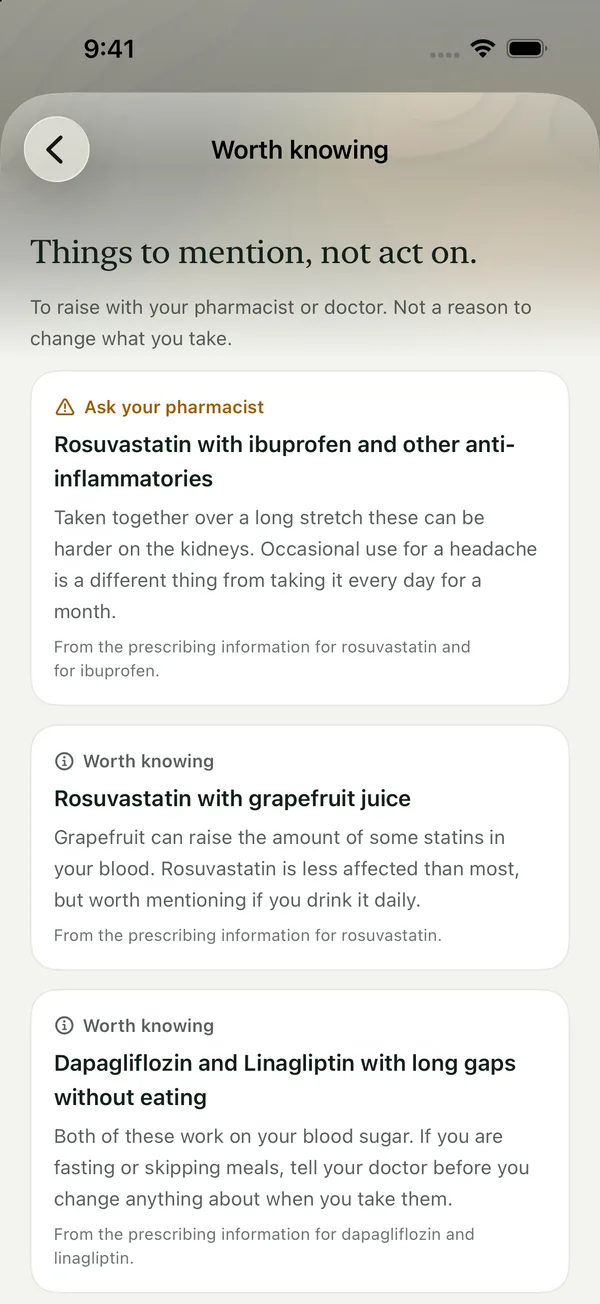
When two of Sara’s medicines are worth mentioning together, the app tells her in plain words, with a source line from the prescribing information. Each notice is something to raise with her pharmacist or doctor, never an instruction to change a medicine. Behind it is Kwelio’s own medicine knowledge base.
Sample dataHer choice, and she can stop any time.
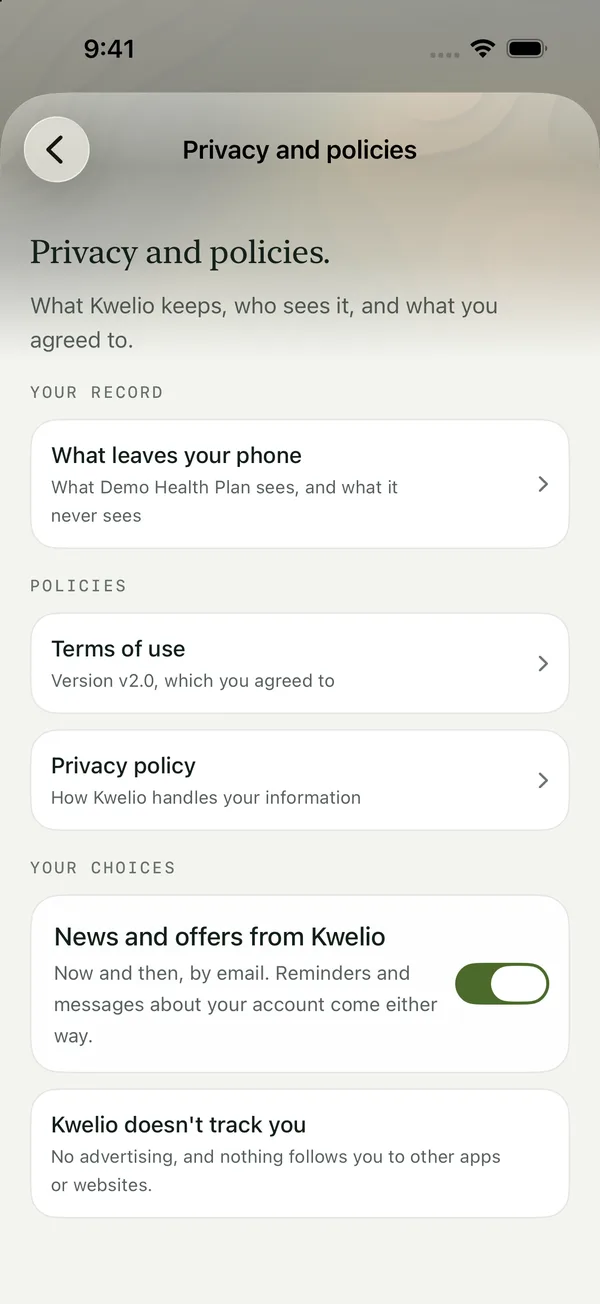
Her care team sees her medication score and whether she might need support. Not photos, not daily logs. Data from other health apps never feeds the score.
06 · The score
One number a care team can act on.
KAS, the Kwelio Adherence Score, shows how consistently a member keeps to their medicines. KIS, the Kwelio Intervention Score, flags who might need support soon.
- 0–100KAS, over a rolling 30 days. No score until a member has 14 days and 10 scheduled doses.
- 0.88AUROC on CMS DE-SynPUF (US Medicare synthetic claims), 2.1M de-duplicated records. It shows the method works, not that it is proven on a UAE cohort.
- NeverDuring pilots, the score is never used for cover or premiums.

Insurers pay for outcomes they never see coming.
For more than two decades I sat on the payer side.
We funded every hospitalization, and we saw almost none of them coming.
 Mohamad AtayaCCO
07 · Their screen
What her care team sees.
Kwelix gives an insurer’s care team a short list of who to reach first, and why, with each member’s score and what is behind it. Kwelio prioritises. Your care team decides.
Kwelix
Demonstration data
The outreach queue is ranked by KIS, and Sara is first with a KIS of 72 because her dose times are slipping and a refill is four days late. Her KAS is 75, down 9 points in 30 days: taken 85%, with a photo 70%, on time 50%, no long gaps 83%. Her care team sees her medication score and whether she might need support, not her photos or daily logs.
640enrolled58calibrating12to reach today
Outreach queue ranked by KIS
- 72KISSaraKAS 75 −9 in 30 daysDose times slippingRefill 4 days late
- 63KISMember CKAS 71 −5 in 30 daysTwo missed evening doses
- 48KISMember AKAS 79 −2 in 30 daysNew medicine added
- 41KISMember DKAS 83 +1 in 30 daysSide effects reported
- 36KISMember EKAS 86 0 in 30 daysCalm week
Sara
KAS last 30 days
75−9
KIS who to reach first
72
- Likelihood of a lapse
- What a lapse would cost
Why her KAS is 75
- Takenweighted by criticality85%
- With a photoassisted verification70%
- On timewithin an hour50%
- No long gapslongest missed run83%
She shares her medication score and whether she might need support. Not her photos or daily logs.
Log outreachSnooze 14 days640enrolled58calibrating582with a score
The cohort last 30 days
- 74median KAS
- 12might need support today
- +5average KAS over 12 weeks
Members still calibrating, without 14 days and 10 scheduled doses, are left out, and any cohort under 5 members is hidden.
Members by KAS range 582 with a score
KAS from 0 to 100, in steps of 10. The lighter bars are under 50.
Programme report September 2026
A monthly summary for the programme team, in cohort figures only.
46outreach logged9snoozed21newly scored73average KAS
Download PDFExport CSV
Average KAS by week, 12 weeks
A report carries cohort figures only: never photos or daily logs, and never an individual’s reasons without their consent to outreach.
A sample screen with demonstration data. During pilots, the score is never used for cover or premiums. Kwelix
08 · A proven idea
Measuring what people do changed lending and car insurance. Medication is next.
When a market can see what people actually do, it stops guessing. Kwelio brings that shift to the medicines people take at home.
Lending · 1989
The credit score
The FICO score turned a payment history into one number. Lenders use it to decide who qualifies, and on what terms. American Express
Car insurance · late 1990s
Telematics
A small device plugged into the car, and now a phone app, records how people actually drive: miles, time of day, hard braking. Insurers can price for the risk each driver really carries, so careful drivers benefit. NAIC
Medication · now
KAS, the Kwelio Adherence Score
The doses a person logs become one consistent measure, from 0 to 100 over 30 days. Their care team can see who might need support, and members earn Lio Points for keeping to their schedule. During pilots, the score is never used for cover or premiums.
Healthcare is already moving this way. In the UK, an NHS study is testing connected inhaler sensors that record each dose and share it with a child’s medical team. NIHR Leicester BRC, 2024
09 · The bigger picture
Making health routines visible, so the people who can help, can.
Kwelio turns what people do every day for their health, starting with their medicines, into scores and records that insurers, doctors and care providers can act on. The infrastructure stays out of sight, so people can get on with their lives.
An ecosystem, not an app
Everyone with a stake in someone staying well.
Kwelio starts with health insurers. The others are where we are heading, each with the member’s consent.
Health insurers
Reach the right member early, before a missed dose becomes a claim.
Life insurers and takaful
In health insurance, a healthy member saves a claim. In life insurance, a healthy member is the whole business.
Doctors and pharmacists
Decisions about a treatment that start from what actually happened at home.
Clinic networks and labs
Patients who keep to their treatment, show up and come back.
Employers and fitness chains
Health and benefits programmes that people take part in.
Families and older people
A dispenser that hands out each dose on time, and family who can follow along when the member chooses to share.
10 · Why we started
Two stories. One root problem.
When my grandmother fell dangerously ill, we discovered she had been given the wrong medication and another dose had been doubled. There was no system to catch it.
I was quoted AED 80,000 a year for health insurance because I have a chronic condition, priced for the risk of not taking my medication. That’s the exact problem Kwelio solves.
11 · What’s next
: every dose, in order.
Kwelio’s own dispenser, designed from scratch. Today’s LioBox is manual and comes with Beads by Kwelio. The next one dispenses each dose on schedule and syncs with POP by Kwelio, so older people can keep to their medicines without fussing with an app.
In development with
Recognition
Recognised by the people who know.

Photo: Dubai Chamber of Digital Economy 
Award · October 2026
Dubai’s App of the Year 2026 and Longevity App of the Year 2026

Competition · 2026
Top 10 finalist, LBS MENA Startup Competition 2026
- NEXUS
Accelerator · 2026
Accepted into NEXUS

Award · 2025
Best Health & Wellness Startup of the Year 2025

Accelerator
MIT DesignX

Award · 2025
Global Recognition Award 2025

Ranking · May 2026
#7 HealthTech company on F6S, May 2026
Collaboration
In collaboration with Dubai Health Innovations
From the Journal
Medicines, supplements and health, explained.
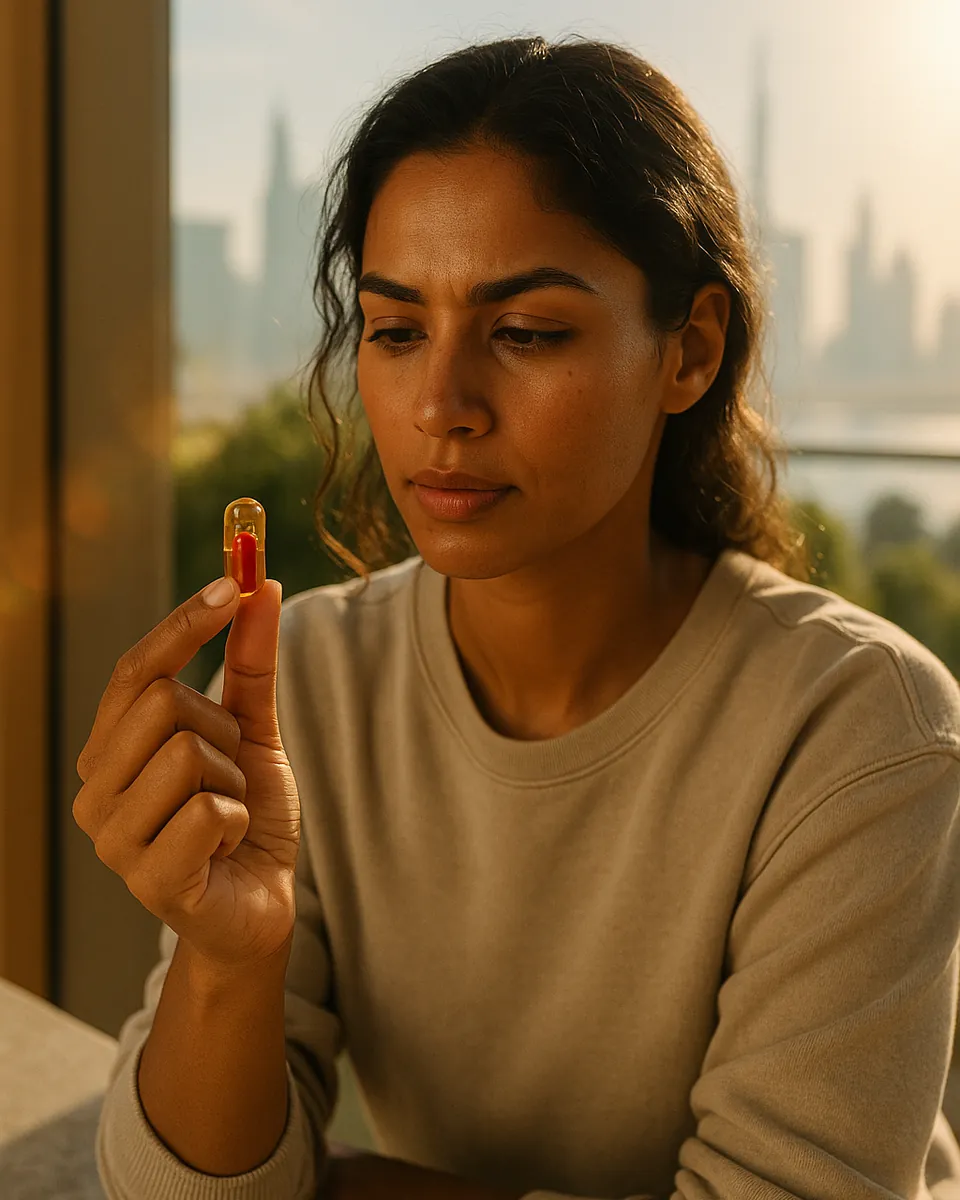
Why people miss doses: what the research says
Forgetting is only part of the story: research points to side effects, cost, beliefs, complex regimens and feeling well as common reasons.
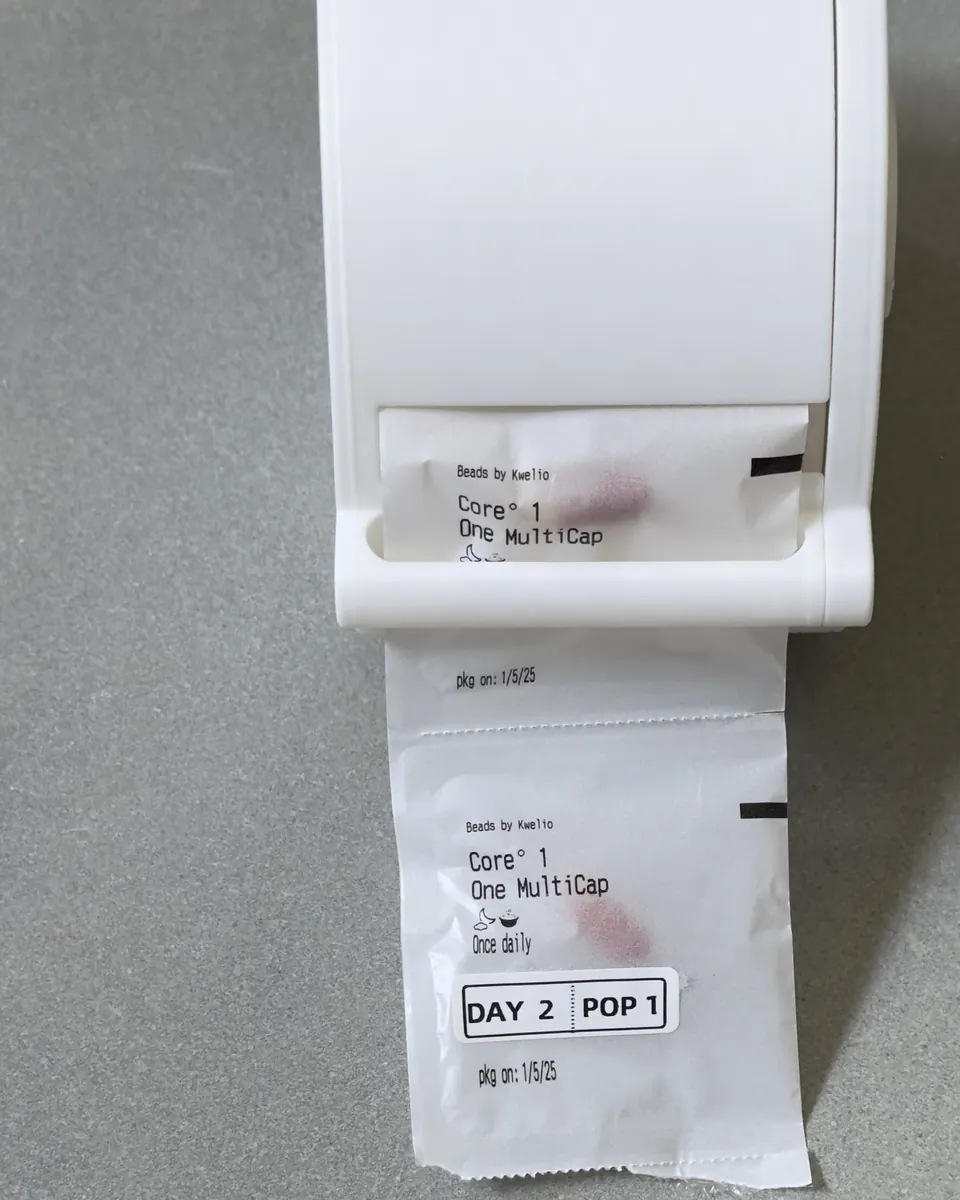
How to read a supplement label, line by line
Serving size, %NRV and %DV, compound versus nutrient amounts, and what quality certificates do and do not tell you.
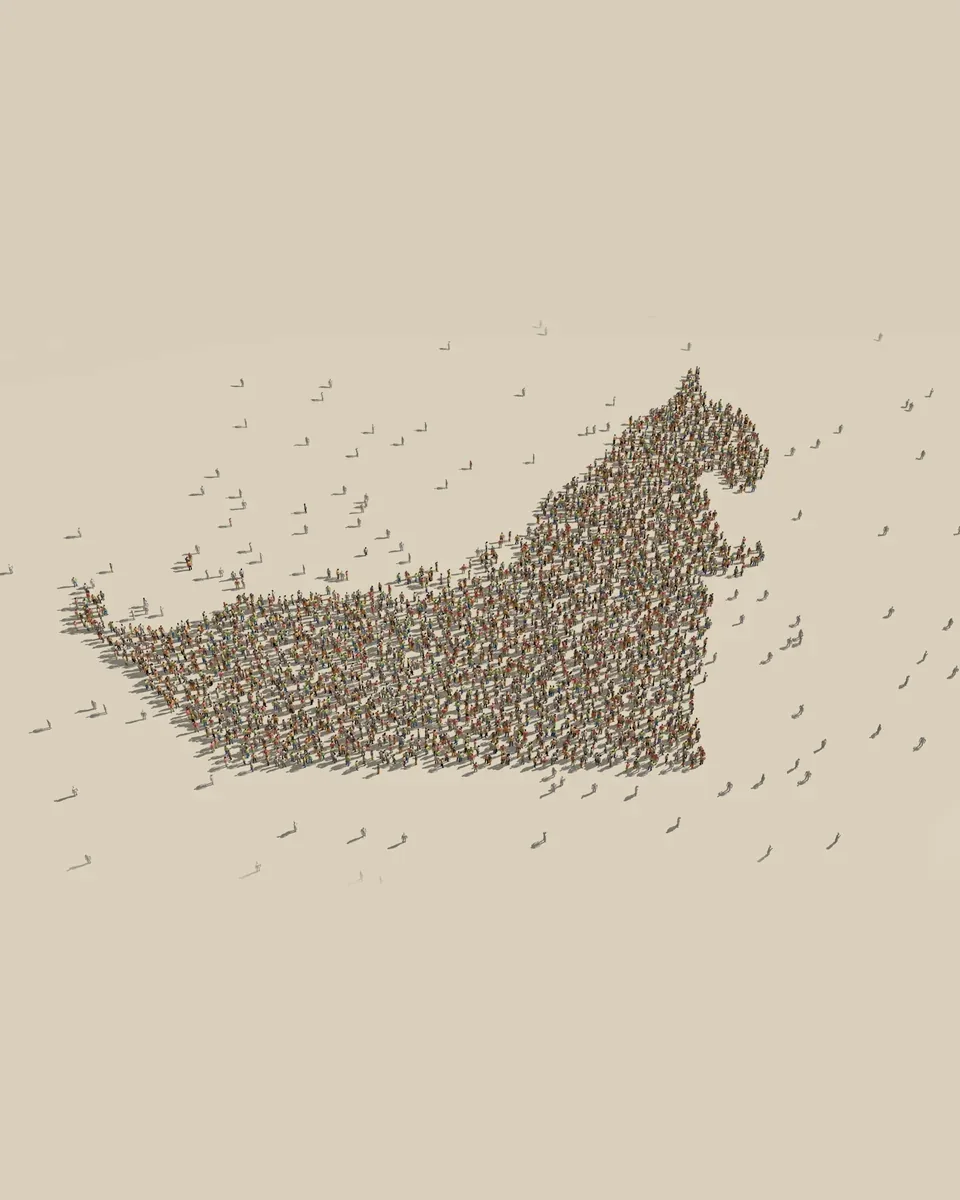
Chronic disease in the UAE, and why consistency matters
What long-term medicines do for diabetes and heart disease, both common in the UAE, and why taking them consistently makes a difference.
For health insurers
Ready to make adherence visible?
Book a 30-minute demo. We’ll walk you through Kwelix, the KAS and KIS scores, and how a pilot works.